Norda005
Norda 005 Review & Durability Test
A lightweight race shoe that proved durable and comfortable through 650+ miles of training and racing.
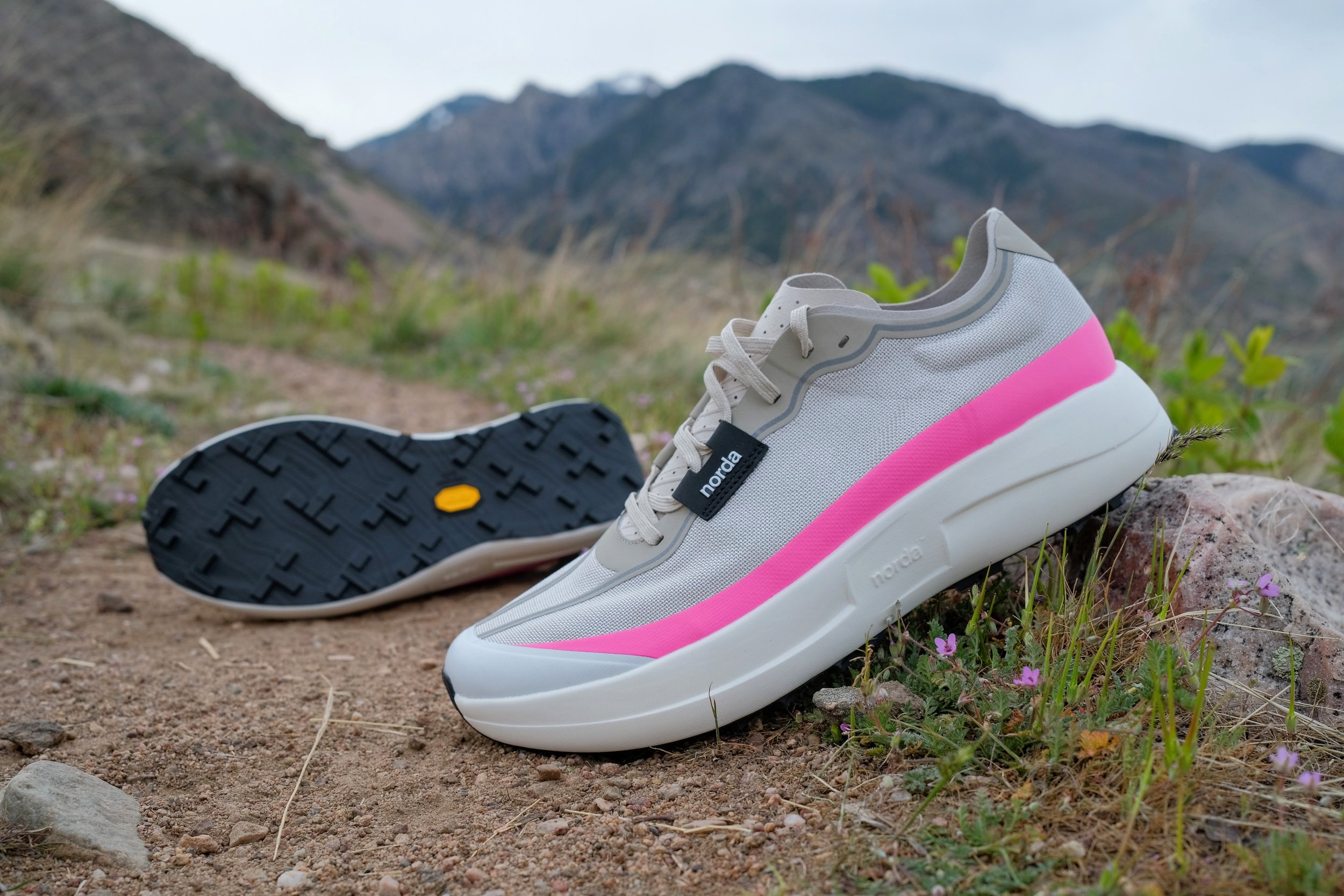
Overview & Specs
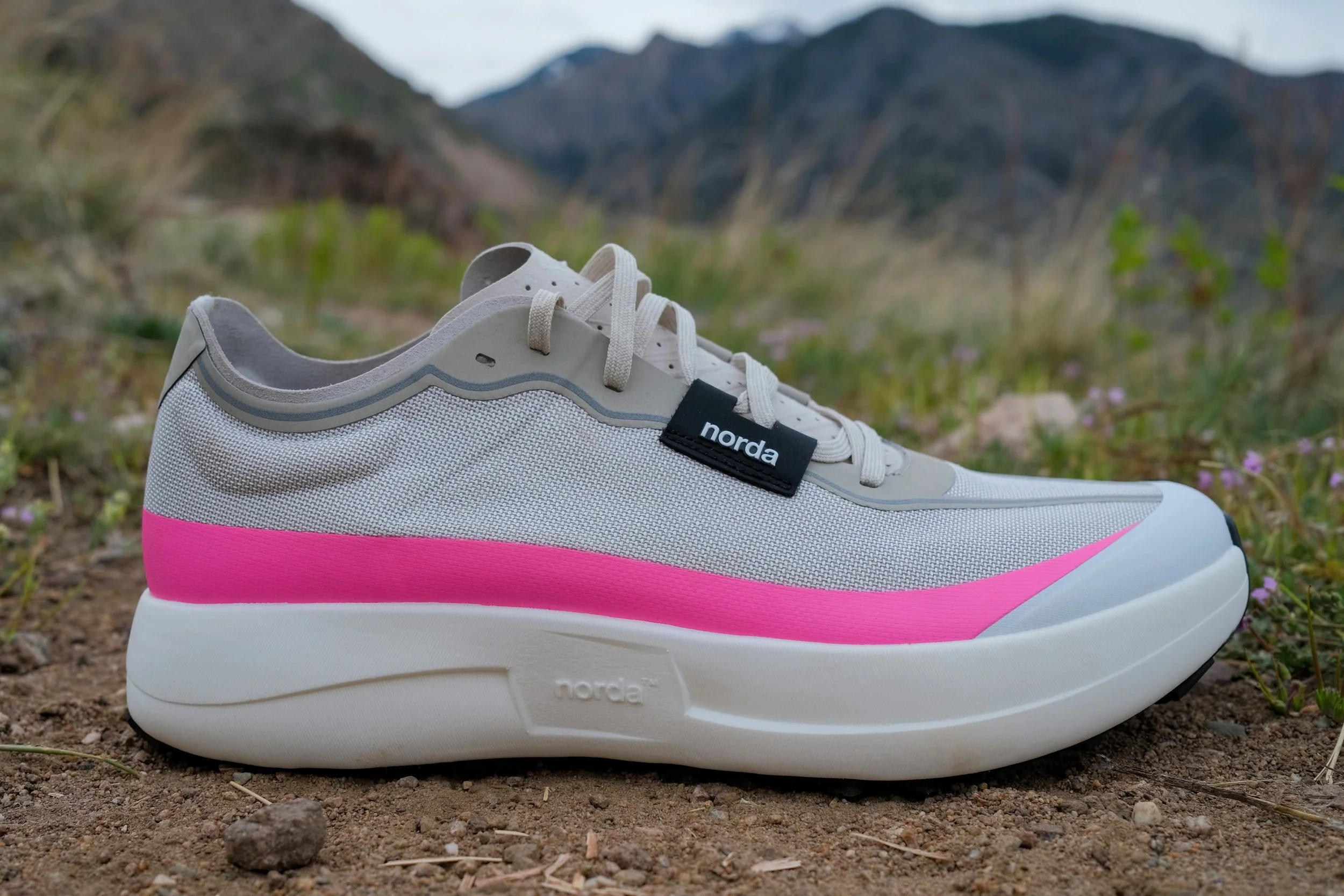
Weight || Ultra-lightweight; 7.5 oz (Men’s US 8.5), 9.2oz (Men’s US 11.5)
Midsole || Arnitell TPEE super foam delivers a soft, responsive, and durable ride.
Drop & Stack || 7mm (28.5mm heel / 21.5mm forefoot) provides a balance of ground feel, cushioning, and protection.
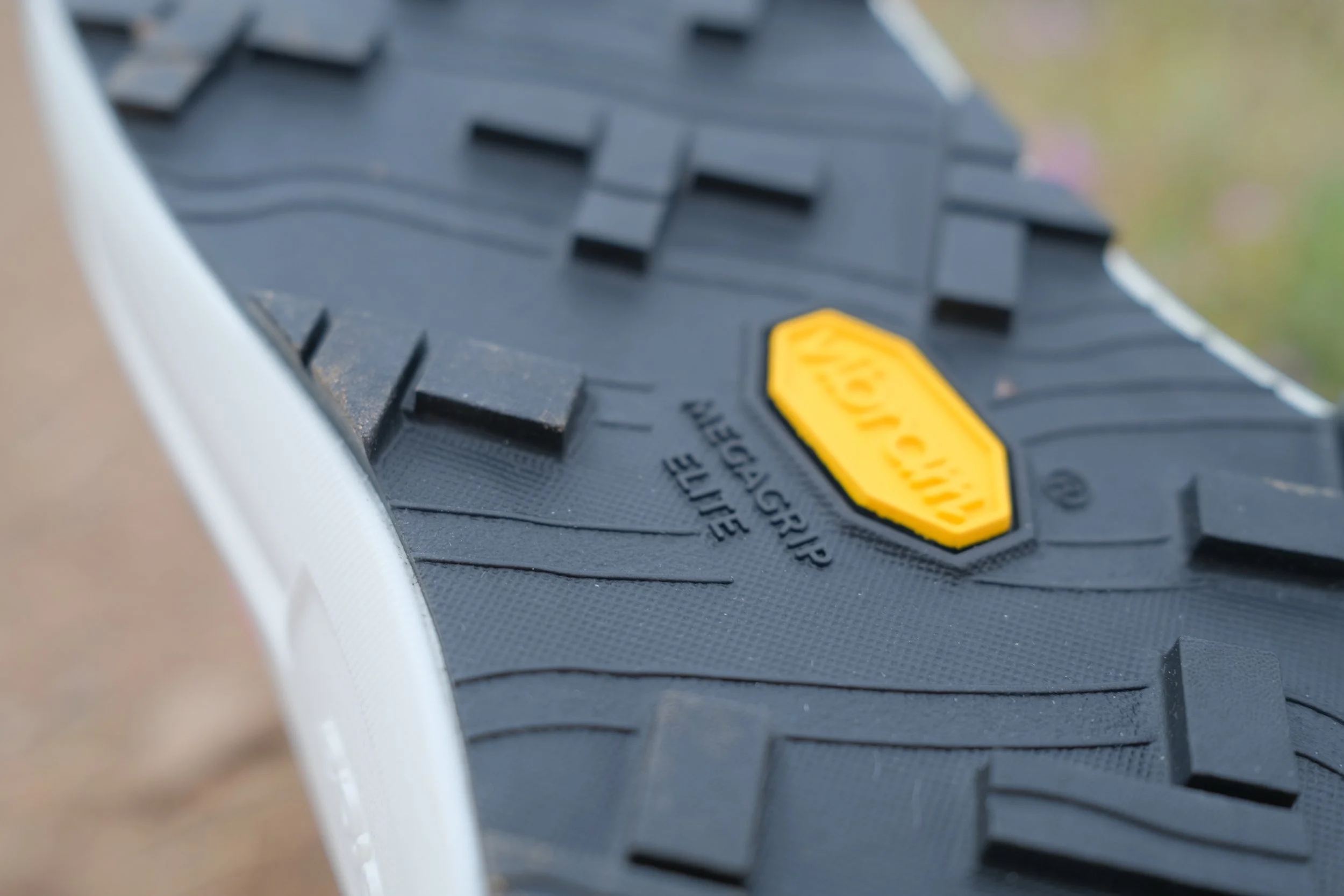
Outsole || Vibram Megagrip Elite with 4mm lugs offers soft, tacky grip in most conditions.
Upper || Open mesh bio-circular Dyneema® is breathable, pliable, and highly durable.
Reviewer Profile:
Jared VanderHook || Men’s US 11.5 | 6’0” | 170 lbs
Miles logged || 650+ miles on a single pair | 1,500+ miles across three pairs
Terrain tested || Light trails | Gravel roads | Steep and loose mountain trails | Technical scrambling | Off-trail
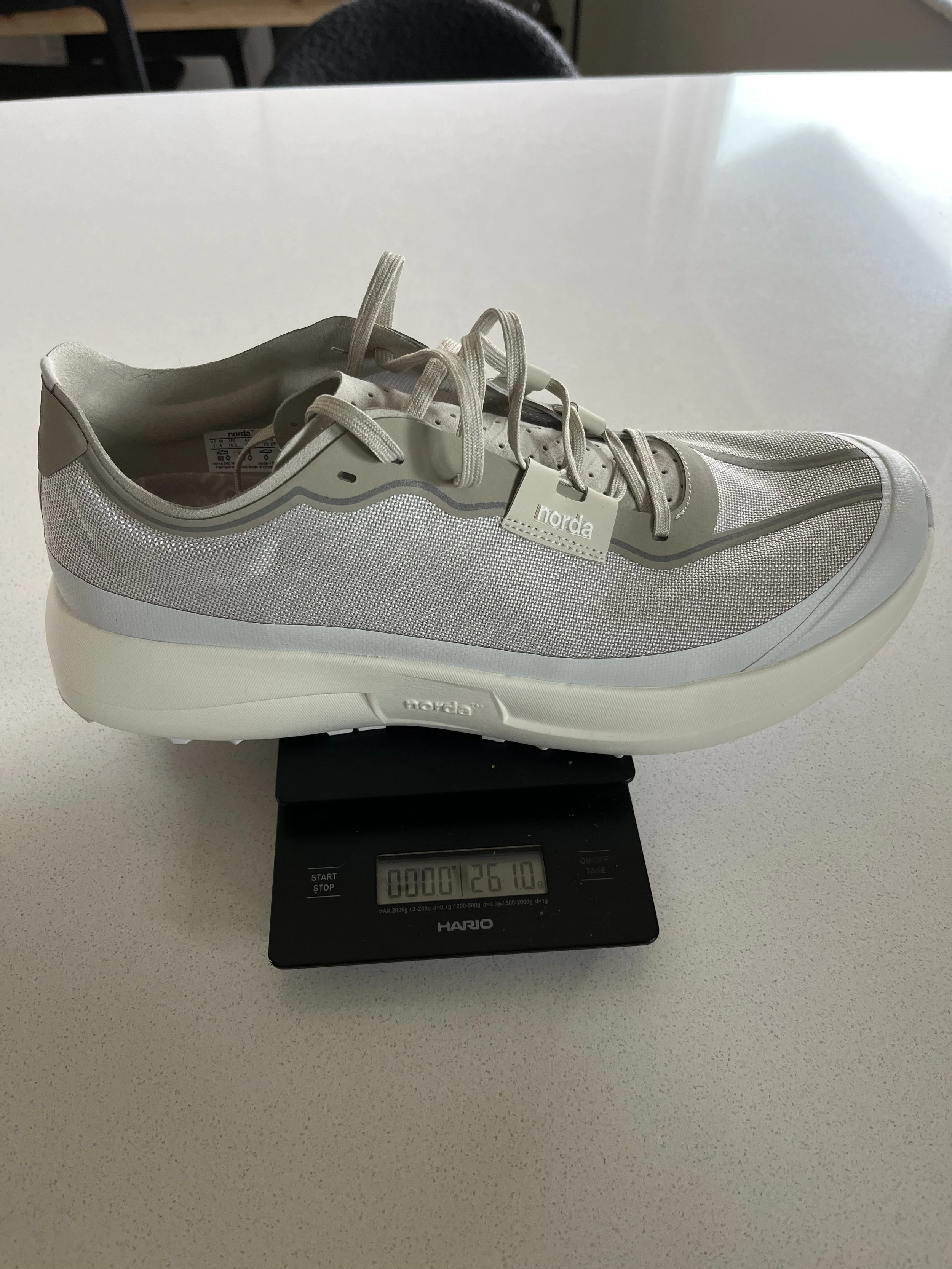
Weighing just 261 grams / 9.2 ounces, the 005 is one of the lightest trail shoes available.
First Impressions & First Run
When I first picked up the Norda 005, I was impressed by how light it felt. On foot, it was clear this was going to be a fun shoe. I took it out for a short run, and the midsole felt responsive and soft. With its lower stack height, I noticed some ground feel, which I didn’t mind. If anything, it added to the sense of agility and made me feel light on my feet.
At first, I wasn’t sure where it would fit into my rotation. I was training for the Wyoming Range 100, a race with plenty of steep, technical, off-trail terrain, and I wasn’t convinced the 005 would provide enough protection for that kind of training or racing. I enjoy running in lower-stack shoes, but I still wondered if my feet would handle them over long distances.
Reflections After 100 Miles
By the 100 mile mark, I had gone from curious to impressed. Although it’s designed to be a race-day shoe, it proved to be much more versatile. It feels springy and quick during faster workouts, comfortable on easy runs, and protective enough for long runs with lots of vert. The midsole’s energy return is notable when the pace picks up.
Despite the ground feel, I found there’s enough protection to prevent foot fatigue on longer runs, and the shoe handles steep, technical terrain surprisingly well. I’m still not sure it’s the shoe I’d choose for a 100-mile race, but it has steadily become my go-to choice for training. (As it turns out, I did end up doing my 100-mile race in them. More on that later.)
Reflections After 1,500+ Miles
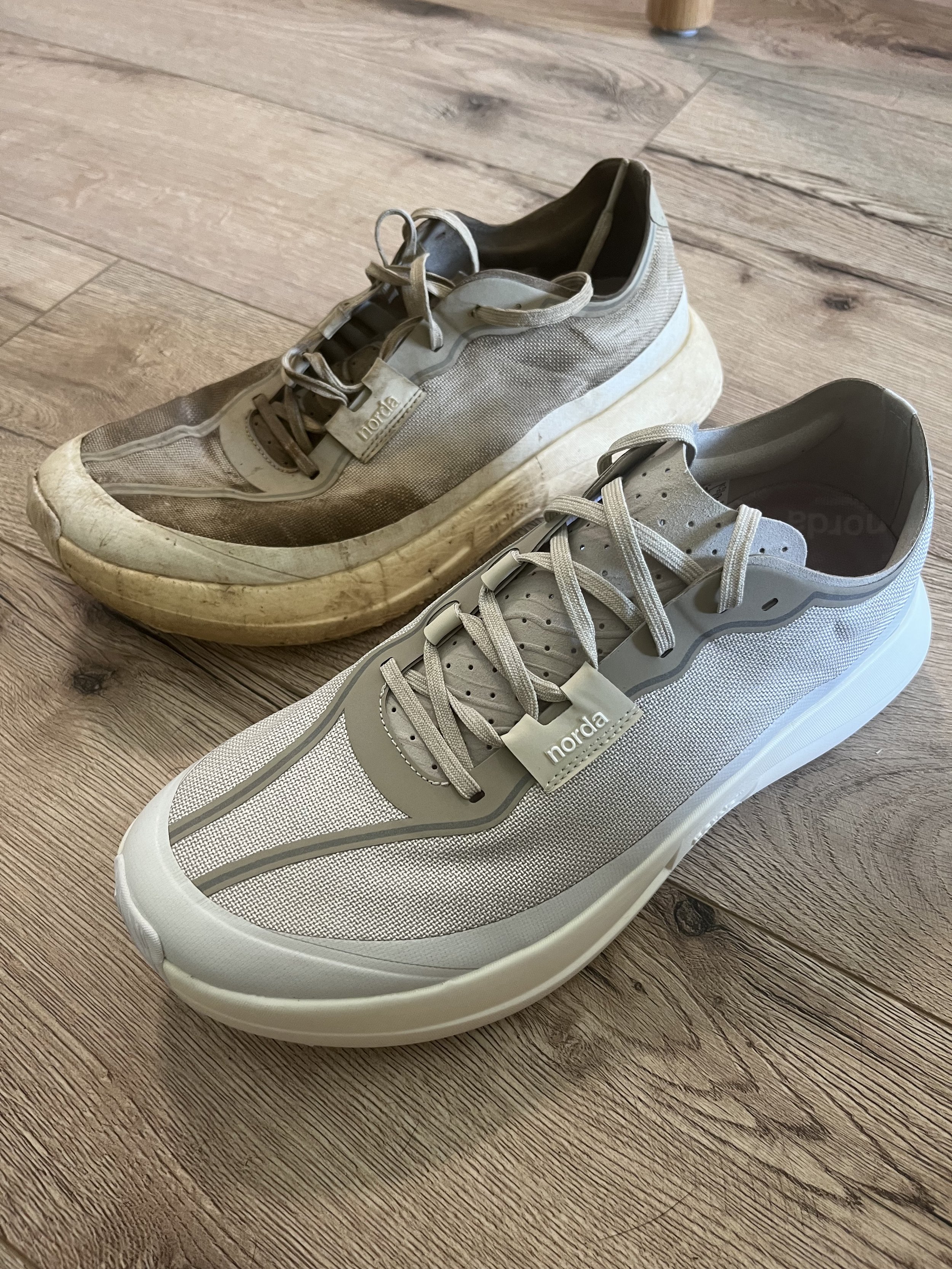
Side-by-side comparison of a brand new 005 and one with 600 miles.
Upper
Like everything else on the 005, the upper is lightweight and durable. It’s made from Open Mesh Bio-circular Dyneema®, which feels soft and pliable but doesn’t stretch out over time. I tend to blow out uppers, but that hasn’t been an issue here. After 650+ miles of technical, rocky trails, there’s still no sign of rips, tears, or noticeable wear.
The upper is plenty breathable and doesn’t feel hot. It also drains well after water crossings, but it’s not so permeable that it lets dust and dirt in.
The gusseted tongue is made from microsuede, and despite being quite thin, I didn’t experience any lace bite, even on steep descents. I suspect the Fit-Lock System plays a role here, helping create the secure lockdown the shoe provides despite the thin, lightweight materials.
While testing on steep terrain, the lockdown felt secure and comfortable. My foot didn’t slide around at all, and the soft, pliable upper held everything in place. It feels very dialed in, although it does take a little time for the upper to form to your foot. The first few runs in a new pair don’t feel quite as precise, but after a few runs it starts to feel like an extension of your foot.
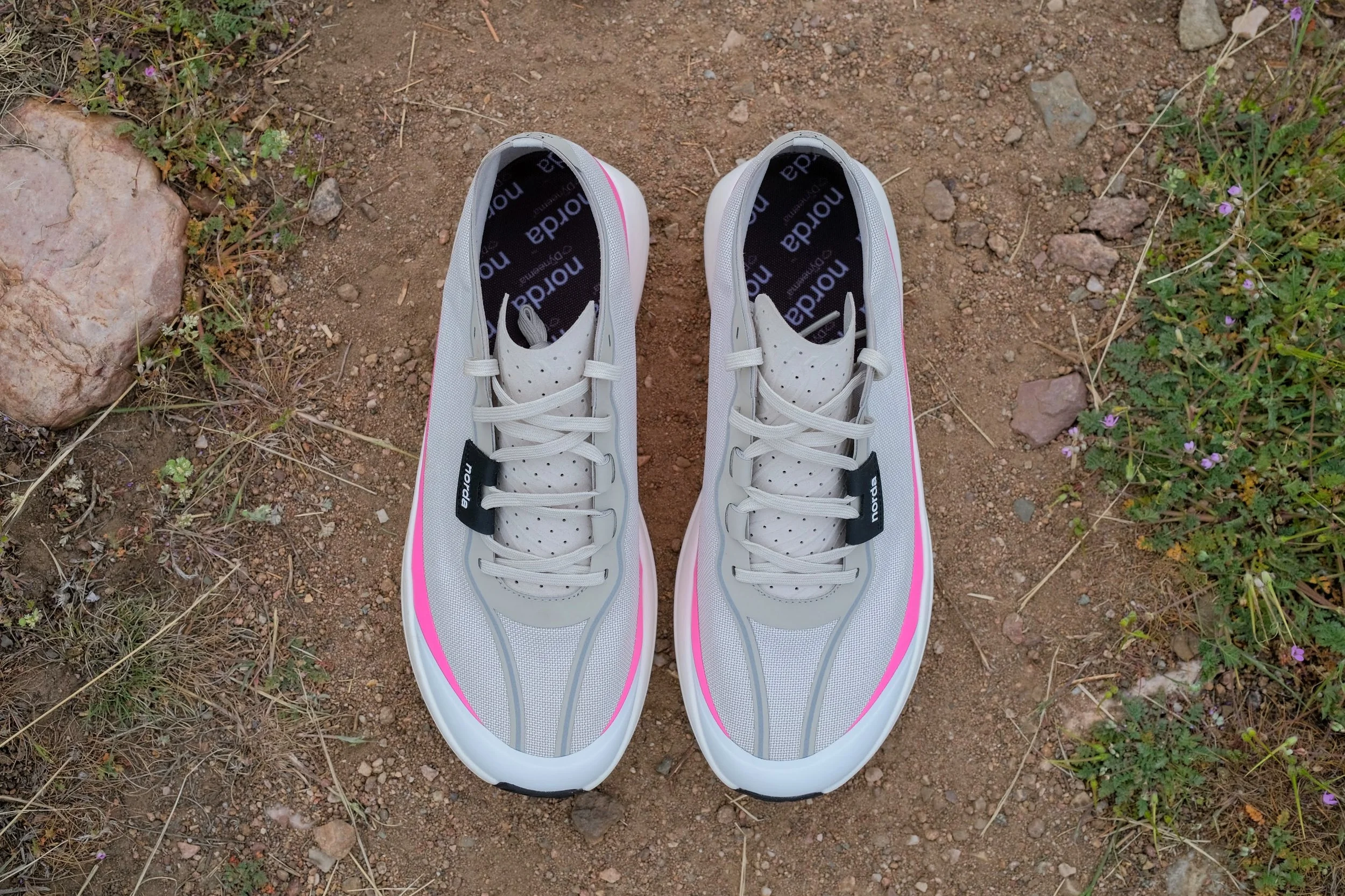
The gusseted microsuede tongue, Fit-Lock System, and heel pods provide a secure lockdown with no lace bite.
The heel has a minimal design that resembles the Norda 001, which didn’t work well for me. Fortunately, a pair of small pods just below the collar adds enough structure to keep my heel locked in place. The one exception came during the Wyoming Range 100, which is steep and technical when the collar started to rub on my Achilles. This was the only time I had this issue despite taking it on similar terrain many times. My guess is that after nearly 100 miles my foot or Achilles could have been slightly swollen. Despite that one instance, heel security has been excellent throughout my testing.
Sizing & Fit
I have an average-width and average-volume foot, and these fit true to size. The fit is fairly dialed in, though, so if you’re looking for a little extra room, you may want to follow Norda’s recommendation to size up a half size.
The toe box is just right for me, secure while still allowing some toe splay. Runners with wider foot might want to consider going up a half size.
The footbed measures 103 mm in the forefoot, 78 mm in the midfoot, and 72 mm in the heel. For comparison, the Nnormal Kjerag has nearly identical footbed measurements, except the Norda is about 2 mm wider in the forefoot/toebox.
Midsole
The Arntiel TPEE midsole is a big part of what makes the 005 feel unique. It delivers a soft, responsive ride with excellent energy return that feels both springy and plush underfoot. While it’s not a high-stack shoe, there’s just enough cushioning to protect your feet while still providing a noticeable sense of propulsion. Even after 600 miles, the foam maintains its liveliness and never feels dead.
At first, I wore the 005 for mostly short to medium-distance runs, but eventually it found its way into my long runs as well. It provides enough protection and cushioning for long distances, but it still rides like a lower-profile shoe. There’s noticeable ground feel, and plenty of torsional flex, which works well on technical terrain. The tradeoff is that your feet have to do a little more work compared to a high-stack, max-cushion shoe.
On some long runs and during my 100-mile race, I did experience some foot fatigue. Around the 100k mark, I remember wishing that I could give my feet a break. Still, I finished the race in them without any real issues. I would run another 100-mile race in the 005, although I tend to prefer lower-profile shoes with some ground feel even at that distance.
Outsole
Vibram developed a super light outsole specifically for the 005, the Megagrip Elite. The 4 mm lugs provide solid traction on most surfaces, and the rubber has a tacky feel that grips well on rock slabs, wet rocks, and even packed snow.
While the traction is solid overall, it’s not exceptional. In addition to the Wyoming Range 100, I wore these on the Hardrock course a few times, including up Grant Swamp Pass. For those unfamiliar, this is a very steep, loose section of the race. I found myself moving along just as well as others around me, but there were moments where I slipped in places I likely wouldn’t have in a shoe with a more aggressive lug pattern, like the La Sportiva Prodigio 2. I also notice quite a bit of slipping in wet, sloppy snow. I don’t think this is an issue with the rubber compound or the lug depth, but more likely an issue with the lug shape, pattern, and spacing. While the tread pattern is similar to the 001, which has excellent traction, the 005 is a more stripped-down version with fewer lugs. I’d love to see the 001 lug pattern on this shoe, which would make me more confident using them in the mountains.
The durability of the outsole is also good, they managed to hold up for more than 650 miles, but it was the first part of the shoe to show significant wear. As a forefoot striker, most of the wear occurred in the forefoot lugs. After 240 miles, I measured the lug depth and found they had worn from 4 mm down to about 2.5 mm in the forefoot and 3.5 mm in the heel. By 650 miles, the lugs measured about 2 mm in the forefoot and 2.6 mm in the heel. The difference in traction between a newer outsole with around 100 miles and one with 600 miles is noticable. Ultimately, outsole wear is the main reason I couldn’t keep running in this pair beyond 650 miles.
Almost all of my miles were on dirt trails, with only occasional short pavement sections (about half a mile from my house to the trail). I tried to avoid pavement so the outsole wouldn’t wear down any faster than it did.
I also noticed some damage where the outsole meets the midsole. Sharp rocks started to chew up the exposed foam slightly, especially in the heel. A bit more protection here, perhaps with the outsole wrapping slightly higher as it does on the 001, would likely solve the issue.
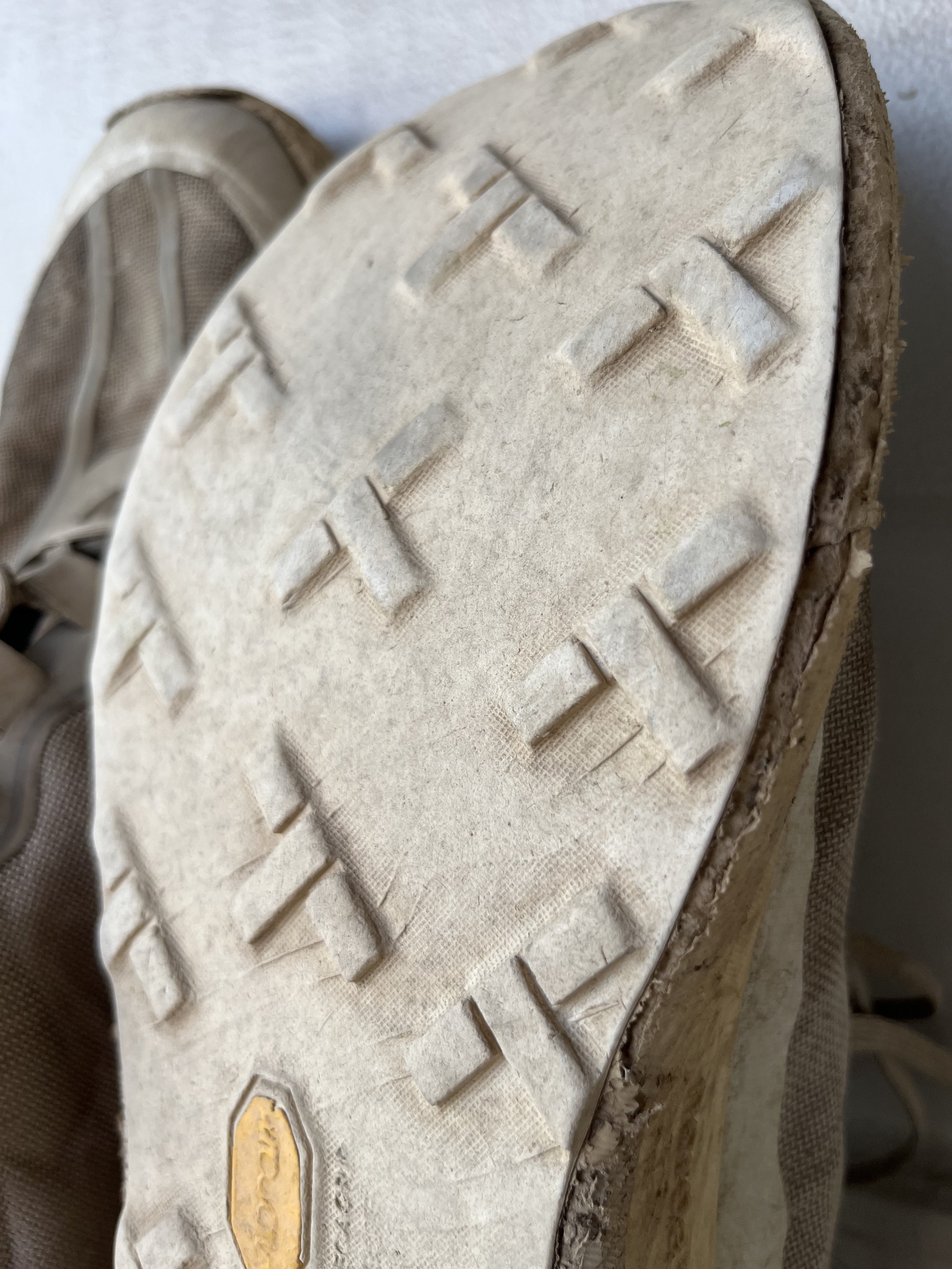
After 600+ miles, the soft, tacky Vibram Megagrip Elite outsole is the first part of the 005 to begin showing wear.
Is the Norda 005 a Super Shoe?
I don’t think of the 005 as a traditional super shoe, usually defined by high stack, a pronounced rocker, and a carbon plate. That said, I understand why Norda uses the label. The 005 feels like a different kind of super shoe, trading the carbon plate for simple, premium, lightweight materials and a midsole with exceptional energy return. The result is a ride that feels efficient and fast. We may start seeing more trail super shoes like this in the future, focused on responsive foam and lightweight construction rather than carbon plates.
Best For
Trail races from sub-ultra to 100 miles
Gravel roads, light trails, and big mountain terrain
Runners who prefer low to moderate stack height and ground feel
Lightweight performance-focused running
Long-term durability
Not Ideal For
Very muddy terrain, sloppy snow, or loose conditions
Runners who prefer high-stack, max cushion shoes
Those looking for deep, aggressive lugs for steep terrain, mud, or snow
Summary
Norda did something special with the 005. I can’t think of another trail shoe on the market that’s so well executed across the board. At first, it seemed like a fast shoe that might work up to 50k, but after training for and racing the Wyoming Range 100 in them, I feel confident using them for just about anything.
I logged more than 650 miles on a single pair, and the outsole was ultimately the only thing that kept me from pushing them farther. In total, I’ve run more than 1,500 miles across three pairs.
The 005 is my favorite do-it-all shoe of 2025, and I expect it will stay in my rotation for racing and training in 2026.
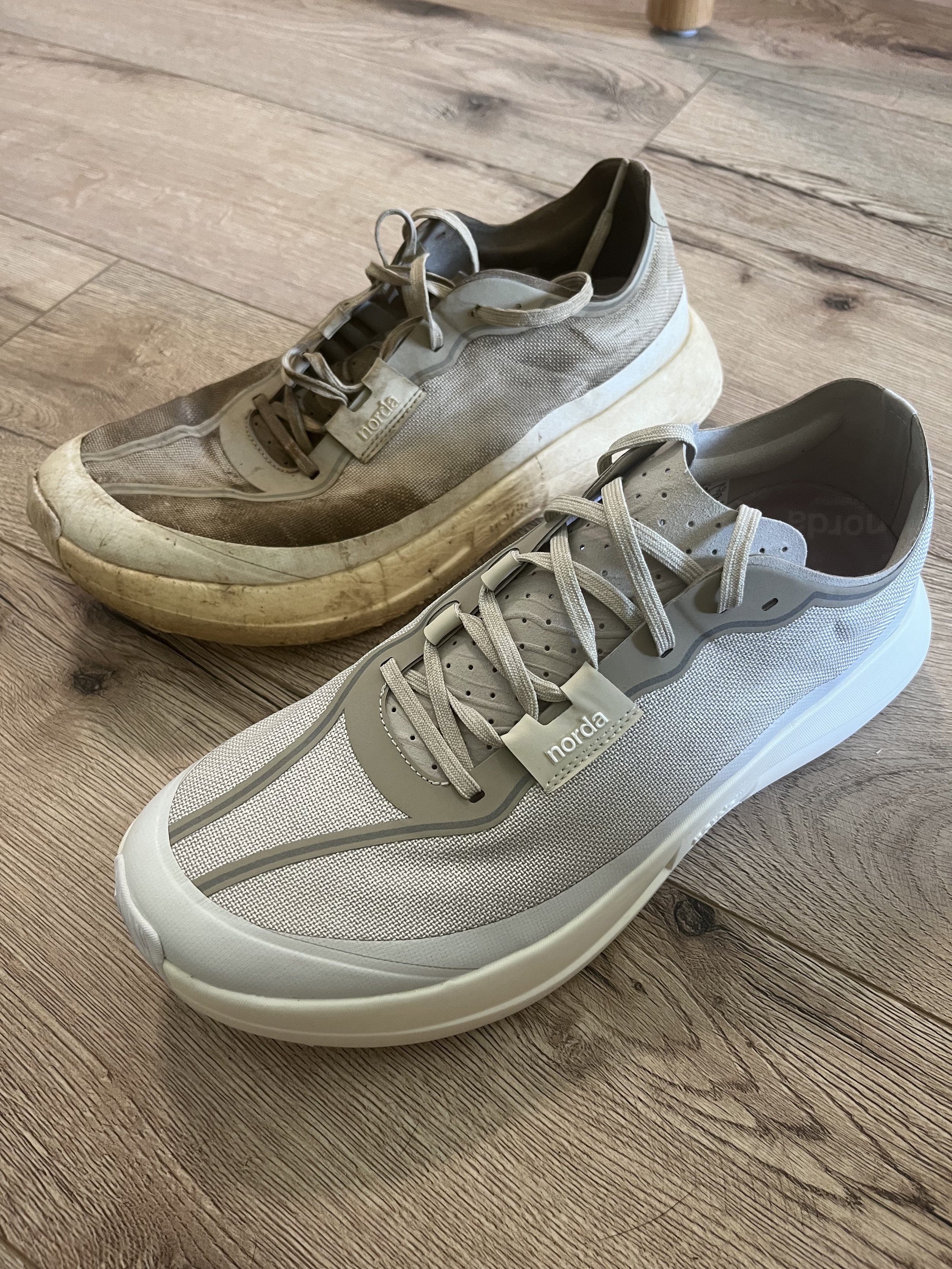
Side-by-side comparison of a brand new 005 and one with 600 miles.